

x

Racial tokenism

Localism

 Fraud disguised as art

Author

https://www.ikon-gallery.org/event/at-home-with-vanley-burke/

https://www.ikon-gallery.org/event/osman-yousefzada/

2

1

    text

Gavin Wade Director Eastside Projects Birmingham UK believes in art up-scaling taking artists ideas and making them his own / stealing, plagiarism.

misrepresentation

Updated 10 06 2022

Art and Social Systems

by Hanz Koontz research 2014 ongoing


+

+

+

+

+

+

+

£250k of public money to give  visitors an 'adverse experience'

Ladywood in Birmingham is poorest place in UK

Birmingham TV - Big News


NHS cuts blamed for 30,000 deaths in new study

+

Alistair Hudson Director for Manchester Art Gallery https://www.manchester.ac.uk/discover/news/alistair-hudson--director-manchester-art-gallery-university-of-manchester-whitworth/

https://www.psychologicalscience.org/news/how-liars-create-the-illusion-of-truth.html

https://en.wikipedia.org/wiki/Illusory_truth_effect

Jonathan Watkins Director -

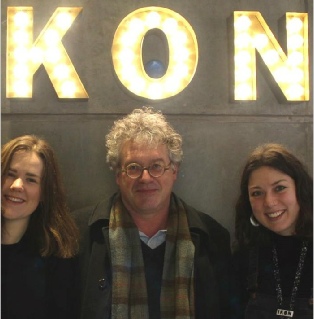
 Ikon Gallery Birmingham UK


comment

contact

Ikon Useful Art

Alistair Hudson former director of MIMA believes art has to be useful.

+

+

Norman Rosenthal

There is a distinction between Joseph Beuys and the industrial processes used in contemporary art by Jeff Koons and Hurst, Norman Rosenthal is a  salesman that uses art history to give himself a purpose  He is a puppet for contemporary commercial artists and occasionally represents the British art establishment.

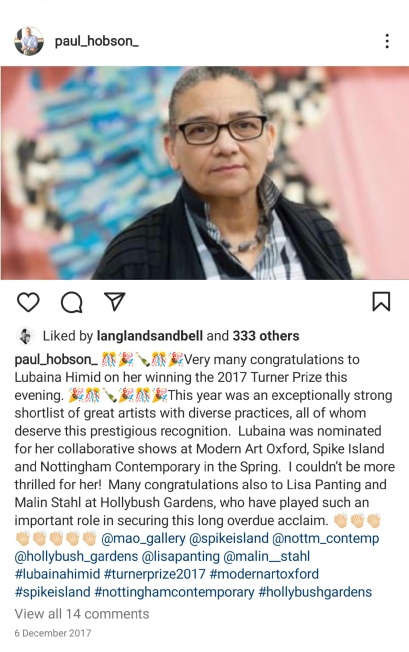
Lubaina Himid

Whipps

Mutab

Historical racial appeasement / tokenism

Invention - impression of social representation

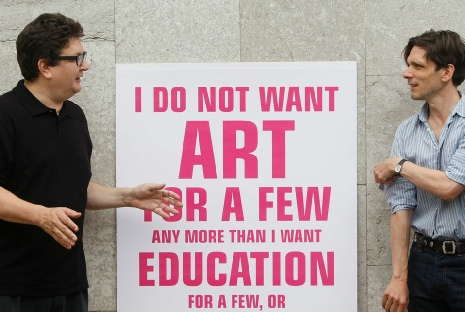
Jeremy Deller

Sonia Boyce

Professor of Black Art and Design

?

Rasheed Araeen

professor of contemporary art

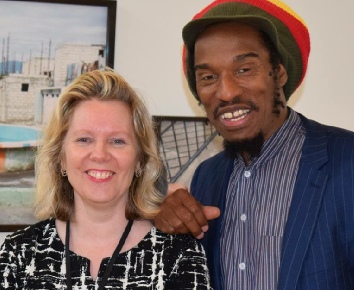
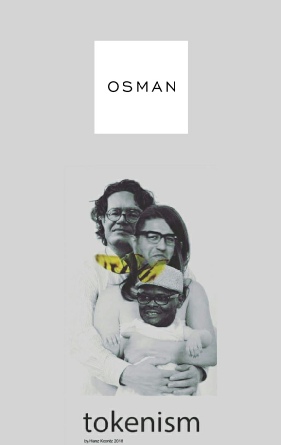
Osman

Invention - racial tokenism


Sam Thorne Director, Nottingham Contemporary, Nottingham, UK

Helen Legg  Spike Island


http://www.spikeisland.org.uk/events/exhibitions/lubaina-himid-2017/

Racial Tokenism

+

The art establishment is protected by a compliant collective of insiders who, despite lacking genuine qualifications, are managed by a dominant white, middle-class structure. Minorities are processed through this system to deflect criticism, while figures like Jeremy Deller manufacture a false societal value that masks institutional fraud. In exchange for their silence and adherence to predictable, safe narratives, these individuals are rewarded with titles, funding, and privilege at the expense of real artists. Ultimately, when the art establishment and gallery directors elevate and endorse the superficial, it functions as a deliberate form of censorship.

Assemble

https://www.tate.org.uk/whats-on/other-venue/exhibition/turner-prize-2015/turner-prize-2015-artists-assemble

Hanz Koontz 2018

https://www.modernartoxford.org.uk/event/the-shadowlight-artists-rising/

There is a distinction between inventing / managing a collective with learning difficulties and  representation of  artists that have learning difficulties or  a disability. Shadowlight are managed to create the impression of representation.

Forensic Architecture

https://www.dezeen.com/2018/04/27/turner-prize-shifted-focus-onto-issues-forensic-architecture/

note

The art system employs a small but expanding army that have been invented to tick all the boxes on race, disability, sexism, ageism - art is redefined and made to accommodate a wider definition  and invites anyone willing to fit a system that revolves around self-preservation.

comment

Luke Hildyard

Director of the High Pay Centre, a think tank doing research/analysis on pay, work and inequality

Fig 1

 Linder Sterling   

https://www.facebook.com/nottcontemporary/photos/a.290251530057/10160367987960058/?type=3&theater

Fashion designer

Photographer

Graphic Designer


Art historian

Engineer

Theatre designer

+

The art system gives insight into political systems and strategies of social engineering that contribute to long-term racial and social fragmentation, while also exposing the economic structures that facilitate the movement of wealth from the poor to the privileged. Through its institutions, markets, and networks of influence, the art world reflects broader social and economic realities, revealing how power is accumulated, distributed, and maintained. It also provides a framework for examining institutional corruption and the ways in which economic norms shape cultural production and value. In doing so, the art system highlights the increasingly complex relationship between contemporary art, financial speculation, and systems of power, raising critical questions about the fine line that can exist between legitimate cultural enterprise and organised crime.


http://www.bbc.co.uk/news/uk-england-leicestershire-47001358

environment

https://www.theguardian.com/commentisfree/2018/nov/20/arts-climate-change#comment-122769343

empathy

Diversity

https://www.theguardian.com/culture/2017/mar/28/serota-sets-up-commission-to-explore-benefit-of-arts-for-children

https://www.theguardian.com/education/2015/feb/17/arts-and-culture-systematically-removed-from-uk-education-system

Political correctness

 Survival strategies  

education

Nicholas Serota Chair of Arts Council England

In 2017 the art-world created a monopoly not only controlling the art spaces but the funding system that funds these spaces.

+

 Dictators

Dumbing Down


Koontz art

community

A cycle of acknowledgement and denial/inaction out of self-preservation.

https://www.telegraph.co.uk/news/2018/03/10/creativity-not-just-young-persons-game-sir-nicholas-serota-says/

ageism

Koontz art

+

Fig 10

Fig 3

Fig 4

Fig 8

Fig 2

 Fig 6

Fig 7

Fig 21

Fig 22

Fig 19

Fig 20

Fig 18

Fig 17

Fig 14

Fig 13

Fig 12

Fig 11

Fig 16

Fig 26

Fig 24

Fig 24

Fig 23

Meritocracy that almost sees itself as omnipotent or at least projects itself as all-knowing

+

+

+

Birmingham City


 Authors

Inventors

 Initiators

+

+

+

+

?

+

+

Photographer

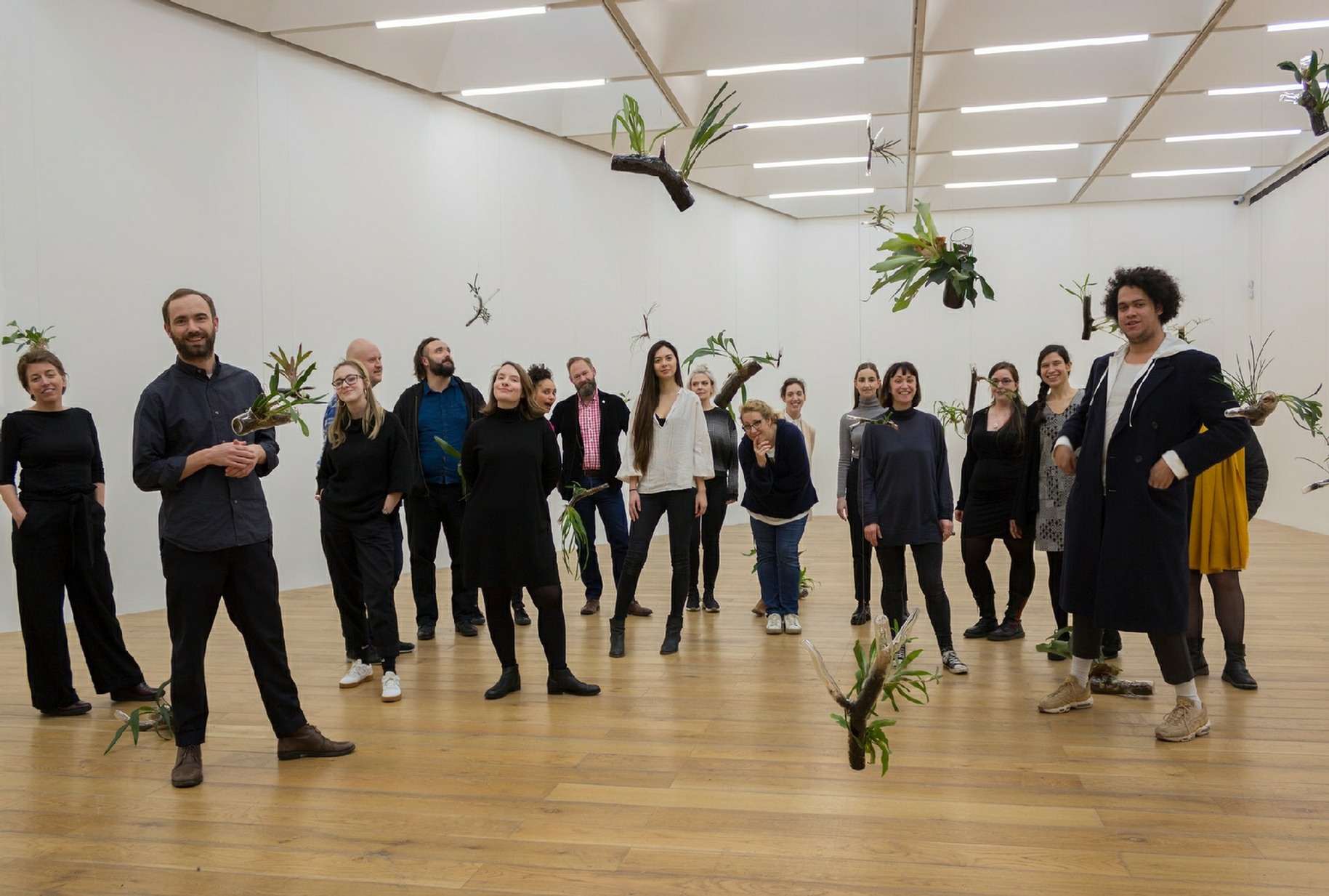
Alis Oldfield is an artist whose practice is inherently multidisciplinary, using varying means to immerse the viewer in constructed worlds. Focussing on willing suspensions of disbelief, her work plays with the fictions we create for ourselves. Revealing their own construction, these worlds cultivate friction between fiction and reality – examining the edges of belief.

+

Graphic designer

+

Photographer

School of art 2019

Consumer Product Designer

Staff

He often makes work about things he doesn’t understand and doesn't know how to do.

+

Computer technician

Contemporary galleries have conflicting dynamics, a different perspective on what art is, this is determined by the director/curator.

Inventing artists instils loyalty - the director/curator has control over his or her investment.

Ikon gallery is more about the Ikon brand and how the brand empowers the director, in a meeting with Jonathan Watkins 2016 it is clear that opportunities with the Ikon gallery revolve around Watkins using the space to inflate the commercial value of art or anything he defines as art and developing a special reciprocal relationship that requires a donation of art to the Ikon gallery

Reciprocal relationships with art directors/curators can include art donations to their personal art collection.

Paul Hobson things have to have a reason for being, there is a huge amount of work that doesn't have a necessity for being.

+

The Public arts centre

https://www.birminghammail.co.uk/news/local-news/ex-boss-failed-west-bromwich-6076546


£120 million

Steamhouse https://www.steamhouse.org.uk/

£15 million

Ikon Gallery - https://www.ikon-gallery.org/

Sylvia King

  https://grand-union.org.uk/junction-works/

 £3.5 million

Eastside Projects - https://eastsideprojects.org/

Vivid Projects - http://www.vividprojects.org.uk/

http://www.werk.org.uk

https://www.lpap.info

Birmingham art spaces

2012 - 2018  £6,048,470


2012 - 2018  739,280

ACE

Birmingham city council

http://grantnav.threesixtygiving.org/

https://www.artscouncil.org.uk/national-portfolio-2018-22/more-data-2018-22

ACE 18/22 £298.000

+

ACE 18/22

£440.000

+

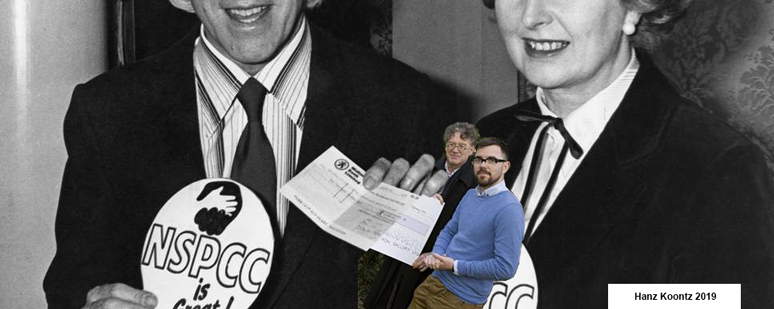
by Hanz Koontz 2019

Cultivating a Personal Cash Cow

Twenty years ago the conversation among Birmingham black fine art graduate with teacher training qualifications revolved around the question - Why are all the fine art lecturers white? the conversation now is why are so many fine art lecturers white and unqualified?

2019

misrepresentation

https://recentactivity.org.uk/

+

+

Fig 25

a

Fig 27

Fig 28

Fig 29

Fig 30

Alistair Hudson former director of MIMA believes art has to be useful. Hudson recognises corruption and uses this abusive system to his advantage


commodifiers

+

+

networks

Fig 20 text


political

pedophile ring

bankers

art

+

+

Corruption gravitates towards corruption until it is absorbed and normalised within a network

Fig 28 text 02

 Misrepresentation

Hanz Koontz CertHE, DipHE, BA (Hons) fine art

British arts establishment is full of 'relentlessly left-wing groupthink', former culture minister says

https://www.telegraph.co.uk/news/2016/10/31/british-arts-establishment-is-full-of-relentlessly-left-wing-gro/

Ed Vaizey

Member of Parliament

https://www.michaelellis.co.uk/news/michael-parliament-debating-arts-funding

Arts Council England operates at arm’s length from the Government,

Michael Ellis MP

Post Peter Bazalgette's  keynote speech (fig 01)  art has been redefined, individuals and institutions  attach themselves to blacks or poverty reinforced by gallery structures - poverty has become a commodity to invent or further an art career.

Fig 28 text 01

Jonathan Watkins / Elizabeth Ann Macgregor Ikon Gallery 2021

Maintaining social / racial separation

comment

Delivering On Diversity - Peter Bazalgette

Chair, Peter Bazalgette, delivers his speech at our event at Sadler's Wells on 8 December 2014, outlining a 'fundamental shift' in the Arts Council's approach to diversity, and placing responsibility on every funded organisation to make their programme of work more reflective of the communities they serve.

Fig 1

https://youtu.be/6175Ceg5eNE

https://youtu.be/_njxIa3-83k

https://youtu.be/x0RHi9-aKmw

https://youtu.be/hbQouAEyMQk

Fig 9

https://www.youtube.com/watch?v=BYC9FH_HjrM

https://youtu.be/-iZbrJY3kBk

https://youtu.be/d9B7OuMTWLY

https://youtu.be/K4AtLu3KkOs

https://www.youtube.com/watch?v=YOKnRyDlr1c&t=13s

https://youtu.be/MYa_fuDwolM

Opportunism and the strategy of dumbing down, control and racial dominance.

Implications of the survival strategy

Penny Woolcock is the product of a broken art system. Driven by a dysfunctional Arts Council England and a desperate corporate push for diversity, the industry has allowed savvy opportunists to secure massive public funding by disguising social commentary as art. Curators like Emma Ridgway use manipulative pseudo-intellectual language to brand Woolcock’s work as "deep" and "beyond explanation," masking what is actually obvious and superficial. The grim reality is that poverty and race have been commodified; they are now just boxes for the privileged elite to tick to secure their next grant. People like Woolcock and Alistair Hudson exploit social division and inequality to fuel their own careers. Stripped of the artistic pretense, Woolcock’s work plays like a self-serving commercial—she is a film director, not an artist, and a prime example of an institutional corruption that many recognize but few dare to challenge.any people are aware of but are invested in.

+

Hanz Koontz is a contemporary global artist working across conceptual art, institutional critique, and research-based practice. His work explores systems of corruption, racism, exclusion, and institutional power, focusing on how art institutions, governments, and public systems shape cultural, political, and economic authority. Through installations, digital media, and public interventions, Koontz examines bureaucracy, cultural policy, and the distribution of opportunity within society. His practice uses archives, public records, and social research to question how narratives are formed and how institutions maintain legitimacy. Hanz Koontz’s work contributes to global discussions on social justice, cultural policy, and accountability in contemporary art and public life.

https://dl.getdropbox.com/s/0r9y5tji34vhif4/Panic-Social-Class-Taste-and-Inequalities-in-the-Creative-Industries1.pdf

Social Class, Taste and Inequalities in the Creative Industries

http://africanstudies.org.uk/2018/06/13/the-campaign-to-decolonise-culture-in-britain/

PDF

Web

The campaign to decolonise culture in Britain

https://www.artshub.com.au/education/news-article/opinions-and-analysis/professional-development/tania-canas/diversity-is-a-white-word-252910

Web

Diversity is a white word

It’s Time for Museums to ‘Decolonize’ Says Former Walker Art Center Director

Web

https://frieze.com/article/its-time-museums-decolonize-says-former-walker-art-center-director?fbclid=IwAR2qd1BXi3y51Oc5k9WySnbaLZBViZpDRZlPaFRo_wXPkN68BSEtxgNpoVU

https://www.theguardian.com/world/2018/nov/20/easter-island-british-museum-return-moai-statue

Easter Island governor begs British Museum to return Moai: 'You have our soul'

Web

https://youtu.be/Wcx8K1Det9I

https://frieze.com/article/art-world-overwhelmingly-liberal-still-overwhelmingly-middle-class-and-white-why

The Art World is Overwhelmingly Liberal But Still Overwhelmingly Middle Class and White – Why?

Web

British artists Langlands & Bell

Pseudonyms to protect authors of controversial articles

http://www.bbc.co.uk/news/education-46146766

Jeremy Corbyn: Schools should cover 'role and legacy' of British Empire

http://www.bbc.co.uk/news/uk-politics-45824498

Web

https://walkerart.org/magazine/kathryn-potts-whitney-artstrike-dana-schutz

Critical Inquiries: Kathryn Potts on Values, Artstrike, and Building the Artists’ Museum

https://www.theguardian.com/world/2019/jan/17/minority-ethnic-britons-face-shocking-job-discrimination

Minority ethnic Britons face 'shocking' job discrimination | World news | The Guardian

https://www.dezeen.com/2018/04/27/turner-prize-shifted-focus-onto-issues-forensic-architecture/

Forensic Architecture has "mixed feelings" about Turner Prize nomination in week of setbacks

https://www.youtube.com/watch?v=WQwNQvcdk-g

https://www.youtube.com/watch?v=jIzlXxO58qU

Artsnight: Nicholas Serota (Series 3, Episode 2)

Venice Biennale Britain’s New Voices 2017 [ BBC ]

The Guardian: Linton Kwesi Johnson: ‘It was a myth that immigrants didn’t want to fit into British society. We weren’t allowed’

https://www.theguardian.com/books/2018/apr/27/linton-kwesi-johnson-brixton-windrush-myth-immigrants-didnt-want-fit-british-society-we-werent-allowed

https://twitter.com/CreativeReview/status/961947229643780096

This Christmas, beware evangelical Christians bearing gifts

https://www.theguardian.com/commentisfree/2018/nov/08/christmas-evangelical-christians-samaritans-purse-children-muslim-countries?CMP=share_btn_tw&fbclid=IwAR2_TU9zJKy1vXnMibX9RoQlds8I4j4omJOGLxRa5ugNxBJEx2_Lnq16um4

Fig 31

Paul Mason British commentator

Web

Racial Selection, Racial Tokenism,

Stereotyping


Access to public funding

Stuat Whipps

Osman Yousefzada

Paul Hobson

Cancelled artist

Mutab Hussain

Misrepresentation

Jasleen Kaur

Racial Tokenism

Joe Lycett

Birmingham Museums

Joe Lycett

Jeremy Deller

Ai Weiwei

Foka Wolf

Melanie Pocock

Nnena Kalu

Racial Tokenism

Turner Prize 2024

Turner Prize 2025

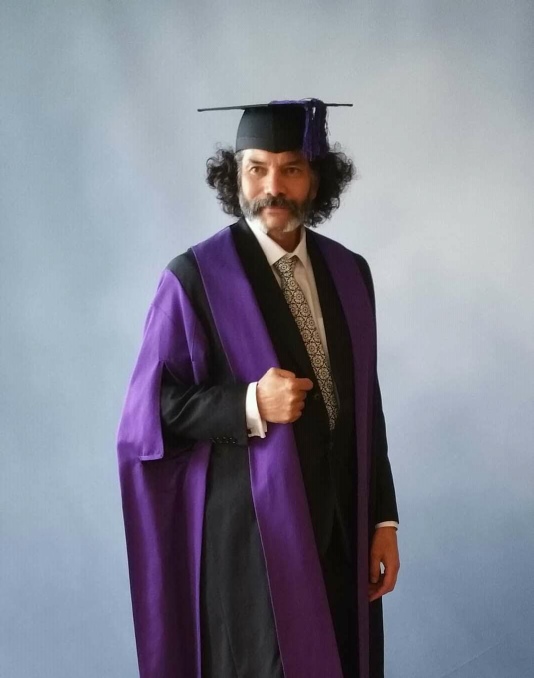
Honorary Doctorate, The Glasgow School of Art

Photography

Fashion Designer

Photography

Comedian

Director IKON Gallery Birmingham

Jewellery Design

Neurodivergent

MINI

Christopher Spencer

Honorary Doctorate University of Wolverhampton

Art establishment other

Pormotional tool

Political tool

Art Historian

Architecture

Turner Prize 2004

Dumbing down

Hanz Koontz

Rasheed Araeen

Racial Tokenism

Racial Tokenism

Photography

civil engineering

>

Helen Cammock

Turner Prize 2019

Stephen Snoddy

The New Art Gallery  Walsall

Tokenism, Racial Stereotyping

Mutab Hussain

[1]

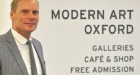
Director Modern Art Oxford

Alex Farquharson

Nicholas Serota

+

>

Institutional Racism: The Foundation of Cultural Authority


Institutional racism within contemporary art is not an anomaly but a structural condition embedded within systems of education, patronage, acquisition, and historical validation. The rhetoric of equality and representation conceals mechanisms that continue to reproduce established racial and class hierarchies. Diversity initiatives, symbolic appointments, and selective recognition function less as instruments of transformation than as methods of preserving legitimacy. By controlling access to visibility, institutions maintain authority over who may participate in culture and under what conditions. The appearance of progress becomes a substitute for structural change, ensuring that racial inequality is reproduced under the language of inclusion.


Tokenism and a Methodology: The Manufacture of Representation


Tokenism is neither accidental nor benevolent; it is a methodology with a history. Cultural institutions periodically manufacture representative figures to satisfy political and social demands while preserving the existing distribution of power. Through exhibitions, prizes, media exposure, honorary degrees, and state recognition, selected individuals are transformed into symbols of progress. These symbolic victories conceal the persistence of exclusion while providing institutions with moral legitimacy. Representation becomes a managed spectacle through which structural inequalities are obscured and reproduced. Tokenism therefore functions not as a failure of the system but as one of its essential techniques.


The British Black Art Movement and Lubaina Himid: From Opposition to Institutional Property


The British Black Art Movement emerged from conditions of exclusion and racial marginalisation, yet its incorporation into the cultural establishment demonstrates the capacity of institutions to absorb criticism without surrendering power. Resistance itself becomes historicised, collected, and transformed into institutional property. The elevation of Lubaina Himid through museums, academia, state honours, and official histories illustrates how cultural establishments convert opposition into evidence of their own progressiveness. In this process, critique is neutralised and transformed into heritage. The movement survives not because it threatens the structure, but because it has been rendered compatible with it. Symbolic inclusion becomes proof of institutional virtue while structural inequalities remain fundamentally intact.




Art Authorship: The Invention of the Artist


Authorship within contemporary art is increasingly the product of institutional manufacture rather than independent artistic production. The artist is not discovered but invented through networks of curators, critics, collectors, dealers, and academics. Visibility and legitimacy emerge from systems of endorsement rather than from any objective measure of merit. The mythology of artistic genius conceals the reality that cultural authority is collectively constructed and strategically distributed. The contemporary artist functions less as an autonomous producer than as an institutional asset whose value depends upon continual validation. Authorship itself becomes an exercise in power, branding, and cultural management.


The Abstract Readymade: Manufacturing Meaning and Misleading Audiences


The abstract readymade represents a triumph of institutional authority over material substance. Through curatorial rhetoric and theoretical abstraction, ordinary objects and gestures are transformed into repositories of intellectual significance. Ambiguity is presented as profundity, while obscurity becomes evidence of sophistication. Meaning is no longer located within the work itself but within the interpretive apparatus surrounding it. The audience is required to submit to institutional expertise rather than engage with aesthetic experience directly. In this process, discourse replaces substance and authority replaces understanding. The abstract readymade therefore reveals the extent to which contemporary art depends upon manufactured meaning and the mystification of audiences.


Incompetence Normalised: Mediocrity as Institutional Culture


Contemporary cultural institutions increasingly reward conformity, loyalty, and self-preservation at the expense of intellectual rigour and artistic competence. Mediocrity is not an unfortunate by-product but a structural necessity within bureaucratic systems that value consensus over criticism. Curators, directors, and administrators reproduce themselves through appointments, commissions, and academic networks, ensuring that incompetence becomes hereditary. Validation replaces achievement, and reputation substitutes for ability. Under such conditions, mediocrity acquires the appearance of expertise while genuine criticism is treated as a threat to institutional stability. The normalisation of incompetence becomes essential to the reproduction of power.


The Culture of Silence and Personal Art Collections: Conflicts of Interest as Professional Norms


The contemporary art world is sustained by a culture of silence in which personal interests and professional authority are deliberately obscured. Relationships between museums, collectors, curators, trustees, and critics produce conflicts that remain largely immune from scrutiny. Mutual dependence discourages criticism and protects systems of patronage from public examination. Personal collections, financial interests, and professional alliances operate behind the rhetoric of objectivity and public service. Consensus becomes a mechanism of self-preservation, while dissent is marginalised in favour of maintaining institutional credibility. Silence is therefore not passive but active; it functions as a technology through which power protects itself.


Soft Power: Contemporary Art as an Instrument of Cultural Governance


Contemporary art functions as a mechanism of soft power through which states, institutions, corporations, and cultural elites shape perception without the need for coercion. Museums, biennials, universities, prizes, and state honours produce narratives of progress, diversity, and intellectual sophistication that legitimise existing systems of authority. Cultural recognition becomes a political instrument capable of manufacturing consent while disguising economic inequality and social fragmentation. The language of creativity and inclusion masks relationships between cultural prestige, economic capital, and political influence. Contemporary art therefore operates not simply as aesthetic production but as an apparatus of governance through which power reproduces itself while appearing enlightened, democratic, and progressive.


Ozzy Osbourne

Pop Star

[1]

Emma Ridway

Methodology / Use

Black Tokenism

Alister Hudson

Academic Misrepresentation

Jonathan Watkins


Outcome for the user

Directorship The Foundling Museum

Black Tokenism

Labana Himid

Outcome for the  Opportunist | Victim

Sam Thorne

Black Tokenism

Opportunist | Victim

Penny Woolcock

Classism

Maria Balshaw

Sonia Boyce

Black Tokenism

Royal Honours, Turner Prize, Public Funding

User /  Savour

Vanley Burke

Directorship of the Tate art museums and galleries

Directorship Japan House London

Farewell to Ikon – Jonathan Watkins, Director 10.02.2022

Photography

Director The Whitworth and Manchester Art Galleries

Turner Prize 2017

Theatre Design

Doctor of Arts,University of the West of England (UWE Bristol)


Studied

Turner Prize 2015

Assemble


Doctor of Letters, Courtauld Institute of Art


Honorary Doctor,Royal College of Art (RCA)

Doctor of Letters, University of Leeds.

Labana Himid

Labana Himid


Modern Art Oxford, the Chief Curator and Head of Programme

Useful Art

Soft Power

British Black Art Movement

Forensic Architecture

2018 Turner Prize shortlisted

[1]

White upper-middle-class

Black, LGBT, Poor, Corrupt

Director of Nottingham Contemporary

[1]

>

Policy paper

Arts Council England - an independent review by Baroness Margaret Hodge


The Arts Council has been totally humiliated – heads should roll

Hodge Review of Arts Council England: Government Response

> Video

+ Text

[1] Press / Social media

Download as PDF

Box ticking